High-Speed Hair Dryer Specifications: What Brands Should Compare Beyond RPM
Compare high-speed hair dryer specifications beyond RPM, including airflow, temperature behaviour, voltage, handling and attachments for your brand.




Start with RPM then compare the air that reaches the hair
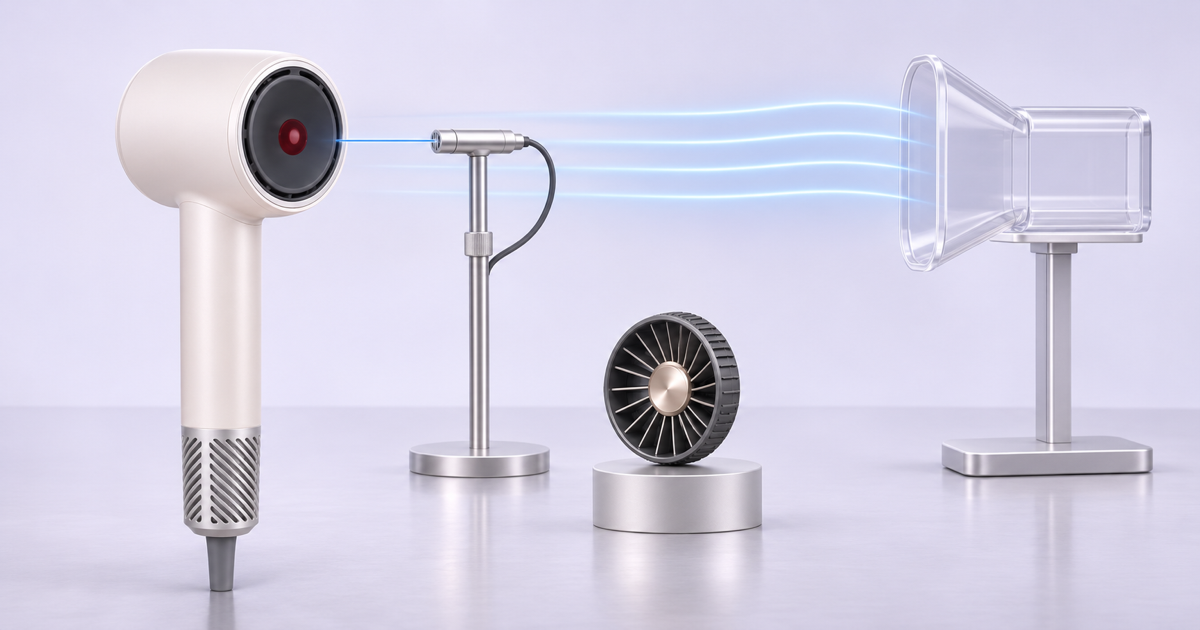
RPM describes how fast the motor rotates. Air speed, usually stated in metres per second, describes how fast air moves at a measurement point. Air volume describes how much air moves over time. These are different measurements. A motor-speed figure alone cannot tell you the dryer’s air volume or how long a customer’s hair will take to dry.
The fan, air path and nozzle also matter. A concentrated outlet can produce a strong local jet, while a different attachment spreads that air over a wider area. This is why a comparison should include the attachment and operating mode, not just a headline air-speed number.
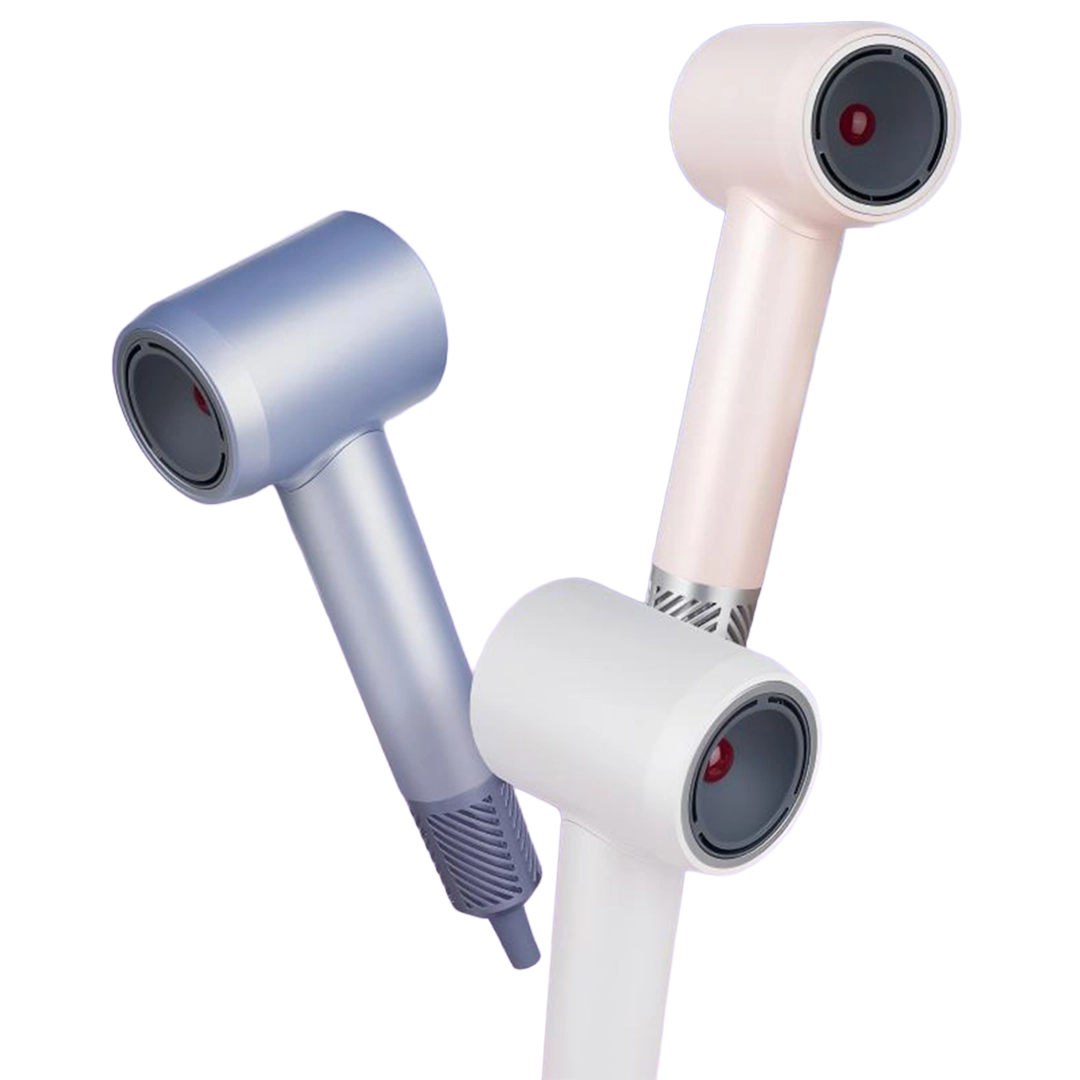
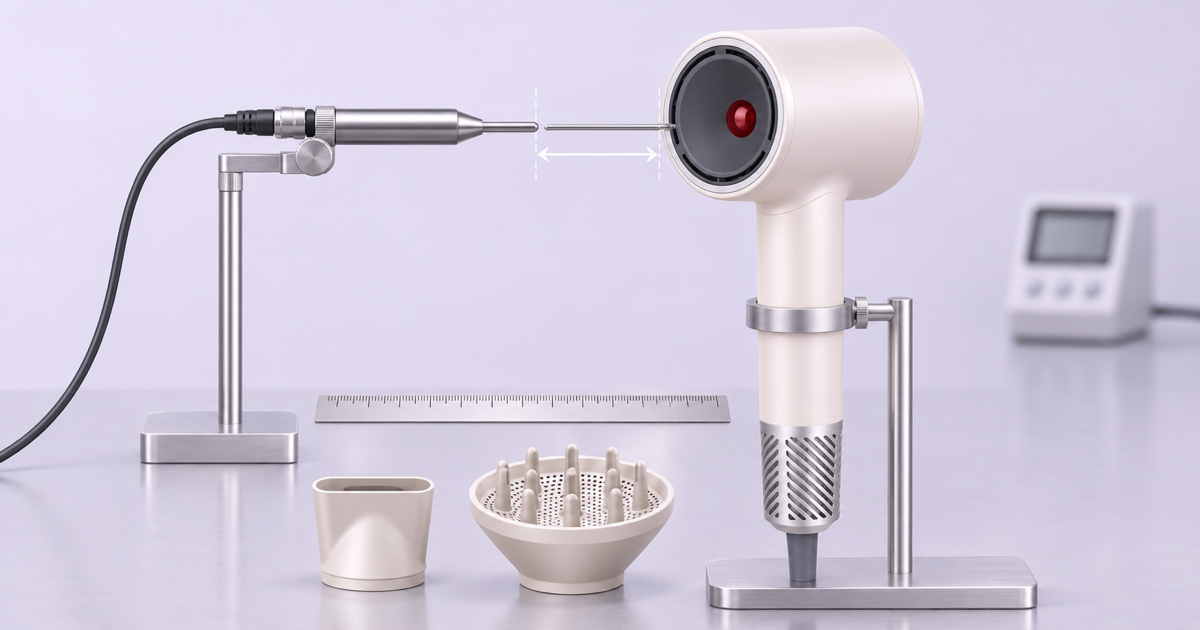
Our high-speed hair dryer platform lists a 109,000 RPM BLDC motor and a high-setting air speed of 21 m/s. These figures describe different parts of the specification. When comparing it with another sample, use the same measurement distance, supply voltage, setting and attachment condition. Then try both dryers on a repeatable drying task. You will learn more than you would from comparing RPM alone.
Look at temperature behaviour across the settings
A temperature-control label is a starting point. What matters during use is how the dryer responds when the user changes the airflow or heat setting, and how smoothly it moves between those settings.
An NTC sensor measures temperature changes and provides feedback to the control system. The overall result depends on how the sensor, heater, airflow and control logic work together. For sample evaluation, check the warm setting as carefully as the hottest setting. It may be the mode your customer uses most often.
Keep the measurement position visible in your comparison sheet. For example, LecSnow’s published platform specification lists warm and hot air temperatures measured 25.4 mm from the outlet. Those values should not be compared directly with a temperature taken at a much greater distance or described as the temperature at the scalp.
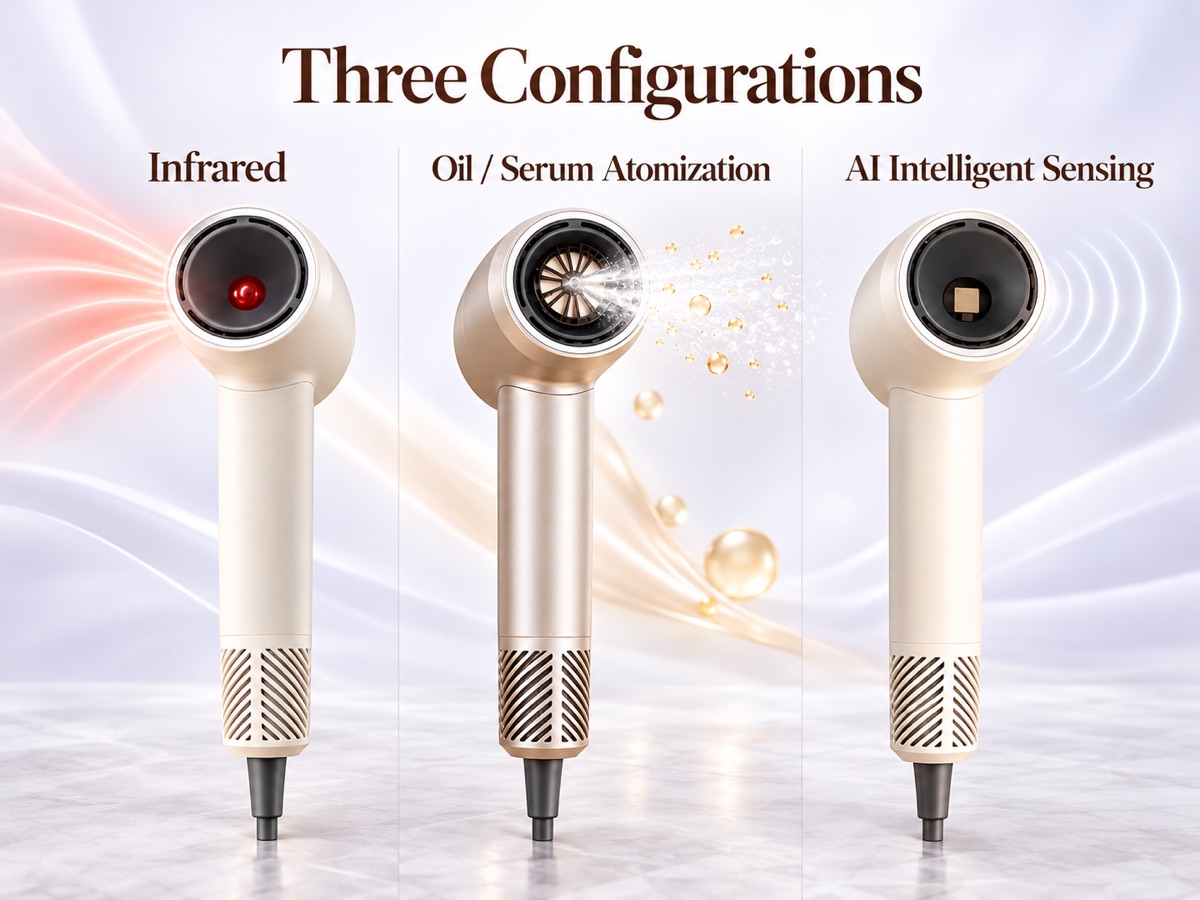
Also distinguish selectable settings from automatic adjustment. On our AI sensing configuration, the sensing system adjusts temperature and airflow. A useful sample review lets the buyer experience that response rather than relying on the word “smart” on the box.
Match power and voltage to the intended market
Wattage is an electrical input figure. It does not tell the whole story about drying speed, handling or temperature control. Compare dryers in the modes customers will actually use, rather than treating the highest wattage as the best specification.
Start the project with the destination market and required electrical version. The 110 V and 220 V entries on a supplier sheet may describe separate versions. They do not, by themselves, mean that one dryer automatically works at both voltages.
For LecSnow projects, lower-power configurations, including around 1200 W, can be evaluated against the market brief. Decide the required voltage, frequency, plug and power configuration together, before finalising the packaging or positioning the product as a travel dryer.
Put handling and attachments on the comparison sheet
A compact dryer still needs to feel balanced in the hand. Compare the grip, button reach and cable movement while using it, not just while holding it for a photograph. If two suppliers quote different weights, check whether those figures include the cable and attachments before deciding which product is lighter.
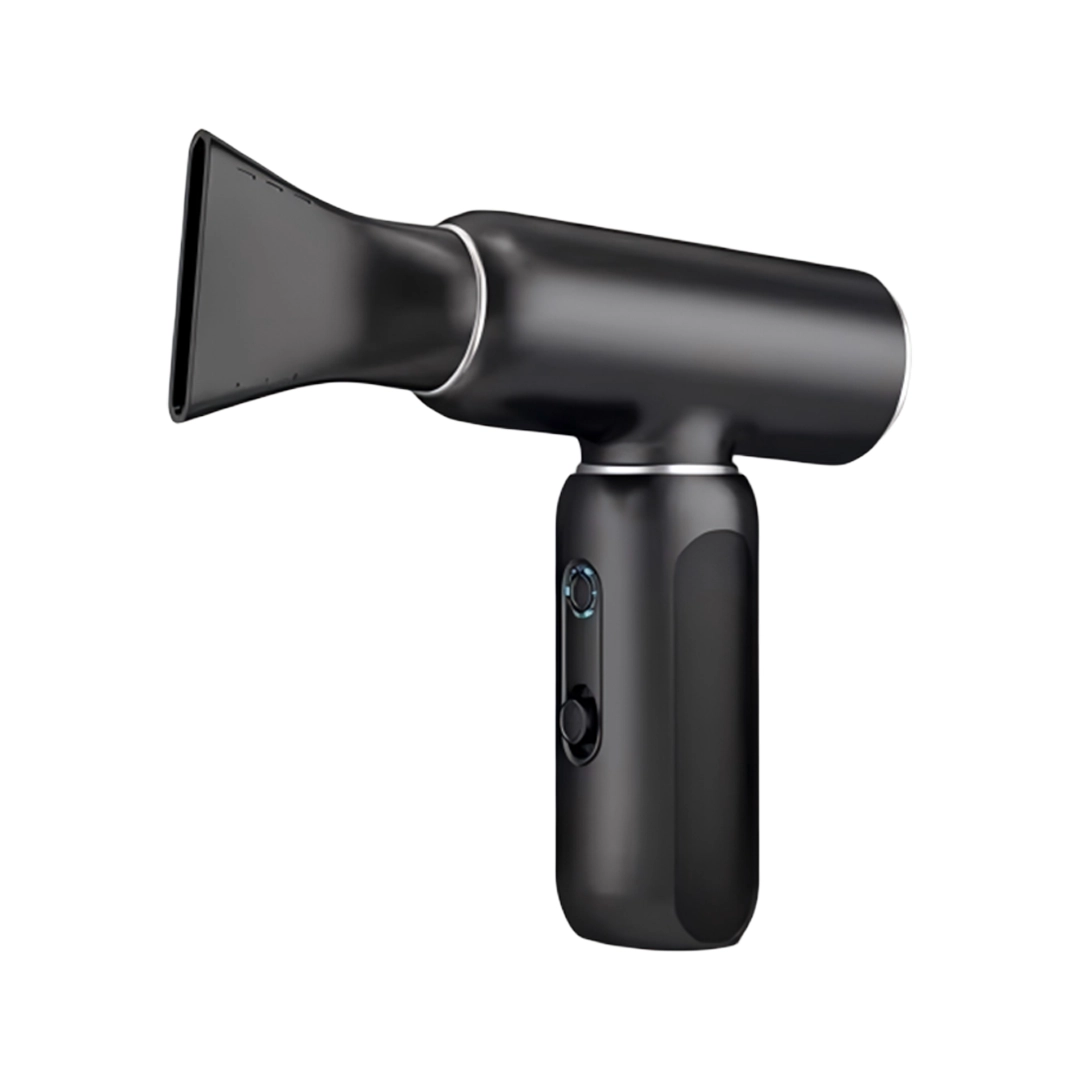
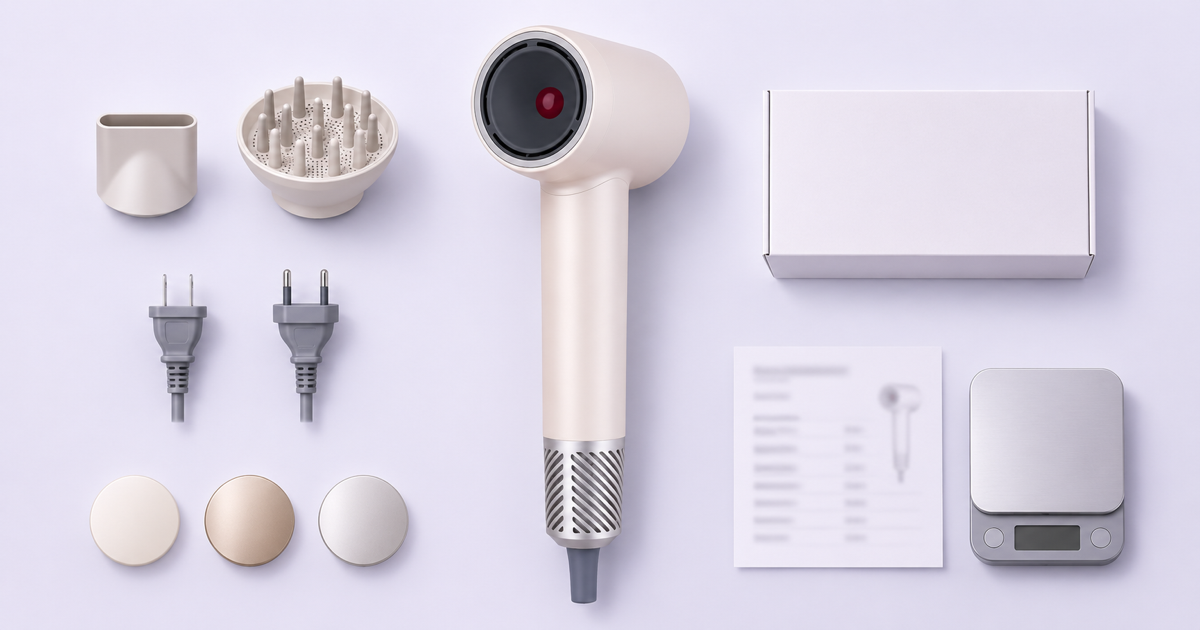
The attachment set should follow the audience. A concentrator serves a different styling task from a diffuser. For a curl-focused retail set, the diffuser deserves its own sample review: assess the fit, handling and airflow distribution with the actual dryer.
LecSnow’s platform can be evaluated with different magnetic nozzle and diffuser options. Select the retail combination early so the product brief, packaging and demonstration all describe the same set. A polished product video is useful here because buyers can see the form and handling alongside the written specification.
Watch the LecSnow high-speed hair dryer video on YouTube
Choose added functions around a clear routine
High-speed and ionic describe different aspects of a dryer, so they can be present in the same product. The same applies to a high-speed platform with an infrared or atomization configuration. The buying question is how the added function fits the routine you want to offer.
For a care-led collection, an oil or serum atomization version introduces a consumable decision as well as a device decision. Our current sealed cartridge has a 6 mL capacity. Internal testing recorded approximately 120–130 minutes of total atomization, equivalent to around 40–43 days at three minutes per day. That gives a brand a practical starting point for planning replacement cartridges.
A refillable option is still in development. For a launch brief, specify the currently available cartridge format and the compatible formulation rather than treating all oils or serums as interchangeable.
For a simpler everyday drying proposition, concentrate on the preferred heat and airflow controls. For an automatic-adjustment proposition, evaluate the sensing behaviour. A function earns its place when the buyer can explain how someone will use it.
Turn the shortlist into a useful product brief
A strong private label hair dryer specification is concise enough to share and specific enough to guide the sample review. Include:
- Target users and main drying or styling routine.
- Destination market, voltage, frequency and plug.
- Required airflow and heat modes, with comparison conditions.
- Preferred handling, controls and attachment set.
- Selected care or sensing configuration, including consumables where relevant.
- Target retail position, planned quantity and packaging requirements.
If an existing platform already fits, our OEM manufacturing service can help define the branded configuration. If your concept needs more substantial changes to the structure or functions, discuss it through our ODM development service.
Start with the LecSnow high-speed hair dryer platform and send us the market, intended retail set and the specifications you want to compare. We can use that brief to discuss a suitable sample and configuration for your range.
Questions buyers ask
Does a higher RPM always mean faster drying?
No. RPM describes motor speed. Air delivery, heat setting, attachment and the drying task also affect the result. Compare complete dryers under the same conditions.
Can a high-speed dryer also be ionic?
Yes. High-speed describes the motor and airflow approach; ionic describes an additional feature. They are not mutually exclusive product categories.
What should a BLDC hair dryer specification include?
Alongside motor speed, include electrical ratings, heat and airflow modes, controls, measurement conditions, weight definition and the intended attachment set. Add the relevant details for any sensing or atomization configuration.